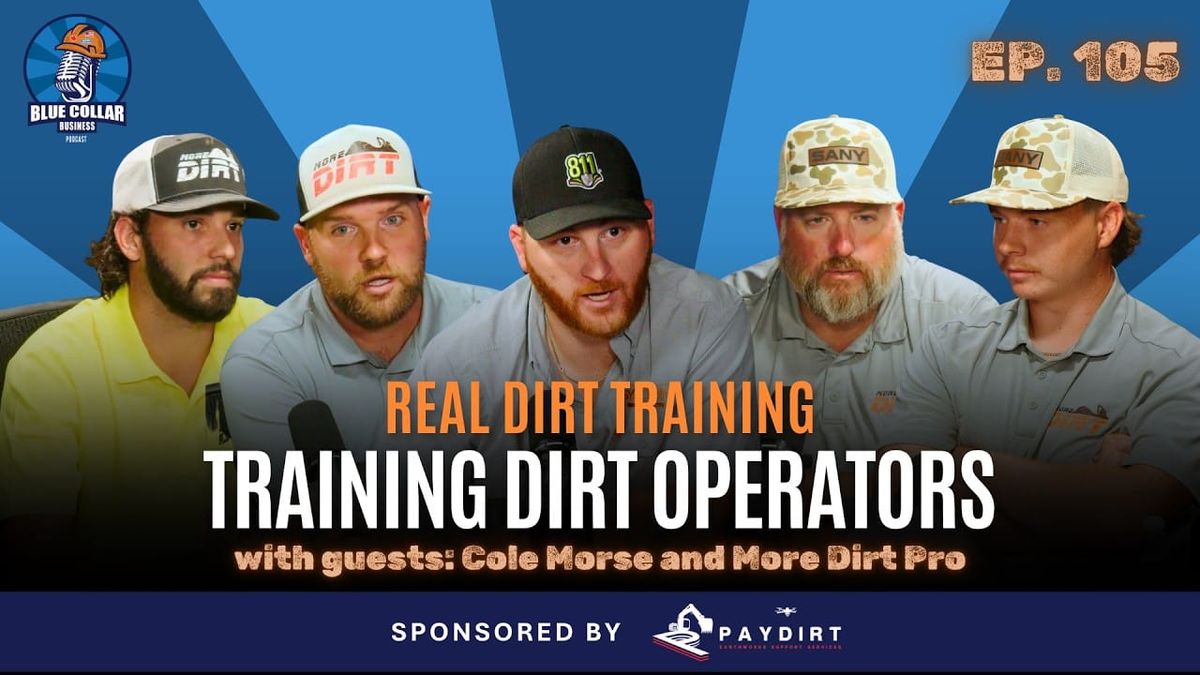
The industry complains about a lack of skilled operators instead of actually training them. Cole Morse and the More Dirt Pro team break down how they launched an interactive app and hands-on dozer school to solve this gap.
We review the logistics of bringing complete beginners into the seat to safely cut slopes and hit hubs. Relying purely on machine control creates vulnerable crews, so we explain why learning to pull grade freehand beats staring at a rover when the satellites drop out. Securing corporate backing and dealing with heavy equipment overhead takes serious conviction.
For dirt contractors frustrated by green hands breaking iron, this conversation delivers actionable methods to structure entry-level training. Please subscribe and share this specific episode with an earthmoving peer. Are you pushing new operators to master manual grade checking before introducing cab monitors?
More About this Episode
Building the Next Generation of Heavy Equipment Operators: A Blueprint for Blue Collar Success
The Changing Landscape of the Dirt World
For decades, the heavy construction and dirt world has operated on a very rigid, trial by fire mentality. If you wanted to learn how to run a bulldozer or an excavator, you were essentially thrown to the wolves. You got in the seat, you messed up a customer pad, you got yelled at by a foreman, and you spent hours in the dark trying to fix your mistakes. It was a brutal way to learn heavy equipment basics. The problem with this old school methodology is that it completely alienates people who want to enter the blue collar trades. We are currently facing a massive shortage of operators in this country. The infrastructure demands are piling up, yet the seats in these heavy machines remain empty. To fix this, we have to change the way we train the next generation of heavy equipment operators. The days of screaming at a greenhorn until they figure it out are over. We need structured, compassionate, and hands on education that bridges the gap between total novice and job site ready.
A New Approach to Heavy Machinery Education
Creating a dedicated space for heavy machinery education is the ultimate game changer for our industry. Imagine a localized dozer school where entry level operators can get in the seat without the pressure of a live job site breathing down their necks. In a controlled environment, these operators can learn the absolute basics in a calm manner. They can learn what to look for on a walk around inspection before they ever turn the key. They can learn how to feel the machine break over a steep two to one slope without the sheer panic of thinking they are going to roll it over. This kind of foundational training is what sets up a blue collar entrepreneur for long term success.
When you provide a safe environment, operators can make mistakes safely. They can push a pile of dirt, fluff it back up, and try again. They can learn how to cut a ditch or grade a crown on a mock road without a project manager screaming about being behind schedule. Furthermore, introducing modern technology into this training changes everything. By using two way radio headsets, an experienced instructor can talk a student through the process in real time. As the operator feels the machine react, the instructor is right there in their ear explaining why it feels that way. This positive reinforcement creates a confident operator who is genuinely prepared for the real world before they ever step foot on a customer property.
Mastering the Basics Before Relying on Technology
We live in an era where technology is rapidly infiltrating the dirt world. From GPS guided blades to fully automated machine control, the advancements are incredible. However, there is a massive danger in teaching new operators to rely solely on technology. A GPS system is a tool, not a crutch. Satellites drop out, base stations fail, and tree cover can ruin your signal. When the screens go dark, the job still has to get done.
This is why we must prioritize teaching the old school freehand methods first. An operator needs to know how to shoot a grade with a laser, read a hub, and feel the dirt underneath the tracks. You have to be able to feel the grade in the seat of your pants. Once an operator is proficient at cutting a pad or pulling a slope by feel, then you introduce the GPS. When they understand the fundamental mechanics of the machine and the material, the technology simply makes them faster and more efficient. If the technology fails, they do not have to pack up and go home. They can grab a benchmark, pull out a tape measure, and keep the project moving forward without skipping a beat.
Overcoming the Stigma of the Trades
One of the biggest hurdles we face in recruiting new talent is the lingering stigma surrounding blue collar work. For years, the public school system and society at large pushed the narrative that success only comes from a four year college degree. The trades were heavily demonized. People were told that if they did not go to college, they would end up doing hard labor for terrible pay. This narrative was a complete lie. The blue collar industry is the backbone of this country. We build the infrastructure that allows society to function every single day.
Today, the opportunities within the dirt world and the wider construction trades are unprecedented. There are billions of dollars in infrastructure projects waiting to be built, and the industry is desperate for men and women who are willing to work hard. You do not need a mountain of student debt to build a lucrative and fulfilling career. By simply showing up, being willing to learn, and putting your pride aside, you can scale a massive business. Pioneers in the media started shining a light on dirty jobs years ago, proving that there is honor, dignity, and serious financial reward in getting your hands dirty. We have to continue that legacy. It is time we change the conversation entirely. We need to show the younger generation that running an excavator or owning a dirt business is a highly respectable and profitable career path.
Partnering with Manufacturers to Drive Change
Another massive shift we are seeing is the willingness of equipment manufacturers to step up and support grassroots training initiatives. In the past, the relationship between a machinery manufacturer and the end user felt very transactional. You bought their excavator, and that was the end of the interaction. Now, forward thinking companies are recognizing that they have a massive stake in the future of our workforce. Without skilled operators to run the equipment, the entire supply chain breaks down completely.
When major heavy equipment brands open their doors and hand over the keys to their facilities to support hands on operator clinics, it signals a monumental turning point. It shows that the industry at large is finally prioritizing education over simple sales pitches. This collaborative approach ensures that entry level operators get access to top tier equipment in a safe and controlled environment, while manufacturers build a loyal base of operators who genuinely respect their machinery.
Taking the Leap and Starting Your Excavation Company
Starting an excavation company or any blue collar business is absolutely terrifying. The overhead is astronomically high. You are buying expensive machines, paying for diesel, and managing hefty insurance premiums. It requires a level of grit and determination that most people simply do not possess. When you are standing at the starting line, looking at the monumental task ahead, it is easy to convince yourself that you are not ready for the responsibility.
The truth is, you will never feel completely ready. There will never be a perfect time to take the leap. Whether you are living in a camper trying to make ends meet or working seventy hours a week for a commercial outfit, the only way to change your situation is to jump. You have to put your faith into action. You might have to rent a machine you cannot really afford, and you might have to take on a project that scares you to death. But if you hold on to a clear vision and rely on your faith, you will find a way to make it work. God does not move a parked car. You have to put yourself in gear, make a firm decision, and start driving toward your goals.
Building a Community and Ditching the Ego
The heavy equipment industry has historically been plagued by massive egos. Everyone wants to act like they are the best operator on the mountain, and nobody wants to admit when they are struggling. This toxic mindset prevents growth and drives good people away. If we are going to build a better future for the blue collar business world, we have to strip away the pride. We need to create environments where business owners and operators can be completely vulnerable about their shortcomings.
This is where modern networking and digital communities come into play. By building platforms where guys can share their weekly wins and their weekly failures, we create a support system that has never existed in this industry before. When a new business owner can log into an app and ask a question about a profit and loss statement, or download a soil calculator to figure out their truck loads, we are empowering them to succeed. Having a mentor or a community to lean on means you do not have to make the same expensive mistakes that the guys before you made. You can get sound advice on everything from forming an LLC to managing your family life while running a high stress business.
Combining Veteran Wisdom with Youthful Energy
To truly revolutionize the trades, we have to bridge the generational divide. The older generation possesses decades of hard earned wisdom. They know the dirt, they know the business side, and they have survived multiple economic downturns. The younger generation brings an incredible adaptability to new technology, a fresh perspective on marketing, and the energy required to push traditional boundaries.
When you put a tech savvy operator in the same room with a veteran dirt mover, magic happens. The veteran provides the grounding and the mechanical knowledge, while the younger operator brings innovative ideas about digital platforms, social media reach, and app development. This synergy is exactly what the industry needs to move forward. We have to stop complaining about the younger workforce and start meeting them exactly where they are. We can use the tools they understand, like digital communities and interactive video training, to pass down the essential skills they need to thrive in the seat of a dozer.
Final Thoughts for the Aspiring Operator
If you are sitting in a ditch right now, sweating in the summer heat and wondering if there is a better way, I want you to know that there is an entire world of opportunity waiting for you. The blue collar workforce is evolving rapidly. There are resources, communities, and hands on training programs being built right now specifically designed to pull you out of the rut and put you on a path to major success. You do not have to figure it all out by yourself in the dark anymore.
Set your pride aside, seek out mentorship, and commit to learning the craft from the ground up. Whether you are aiming to be the most proficient heavy equipment operator in your region or you have dreams of scaling a multi million dollar excavation company, the tools are finally out there for you to use. Take the leap of faith, lean on your community, and never stop pushing forward. The dirt world is waiting for you to make your mark.
Member discussion: