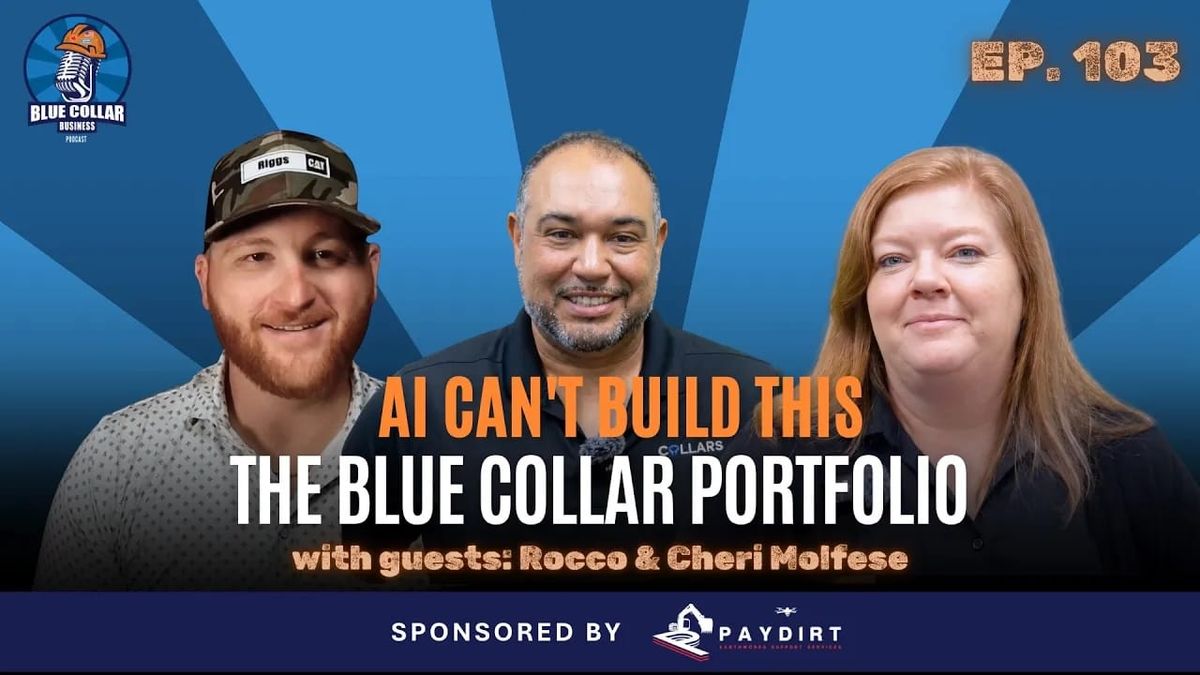
A piece of paper will never show what a man with callused hands can actually build in the field. As the older generation retires and the skilled labor gap widens, figuring out how to properly vet and hire true craftsmen is the difference between making schedule and going bankrupt. Rocco and Cheri Molfese, founders of Crown Coverings and the Collars app, join the show to share their specific expertise in changing the hiring landscape for tradesmen.
We sit down to discuss the painful lessons learned from taking a massive personal risk to build a commercial flooring enterprise from the ground up. We get into navigating the jump from residential to commercial, the hidden leverage of value engineering, and how to manage general contractor relationships before scissor lifts completely derail your floor prep. The real breakthrough comes when Rocco explains how a visual portfolio tells a more complete story of a worker's value on a prevailing wage job than a generic AI-generated resume ever could.
Running a trade business takes a massive mental toll when you are acting as the bank for contractors and maxing out personal credit lines just to keep the lights on during an economic downturn. Moving into the commercial sector requires serious grit and a willingness to step in and save the day when other crews fall behind schedule. You will walk away with a clear understanding of why protecting your company with a lien is just smart business, and how leaning on local supply house relationships can keep your cash flow alive during massive contract payouts.
If you care about hiring reliable crews, expanding your commercial footprint, and fixing the broken application process, you’ll get a lot from this. Please subscribe to the channel and share this episode with another contractor who is fighting in the trenches right now. What is the hardest part about vetting new talent in your specific trade today?
More About this Episode
The Broken Hiring System in the Skilled Trades
The skilled trades industry is evolving rapidly, yet the way we hire blue-collar talent has remained frustratingly stagnant. For decades, employers have relied on the good old fashioned resume to find qualified candidates. We filter through stacks of paper or digital documents, searching for the right experience, the right certifications, and the right background. But there is a fundamental flaw in this approach. You cannot judge a fish by its ability to climb a tree, and you cannot judge a master tradesman by their ability to format a text document.
Right now, the job market is incredibly tight. We are facing a massive generational shift. Older tradespeople are retiring, and the new generation is stepping in with a completely different mindset. As employers, if we continue using the exact same white-collar hiring models to capture blue-collar talent, we are going to fail. We see people complaining about receiving hundreds of AI generated resumes. Anyone can ask a computer to write a perfect application, but artificial intelligence cannot lay an immaculate tile floor, and it certainly cannot install a heavy civil pipe perfectly on grade. We need a better way to assess who we are bringing onto our job sites.
Why Traditional Resumes Fail Blue-Collar Workers
The reality of blue-collar recruitment is that tradespeople speak through the work of their hands. They do not carry around a folder full of formatted bullet points. If you walk onto a job site and ask a highly skilled superintendent or a specialized installer about their experience, they are not going to hand you a piece of paper. They are going to pull out their smartphone, open their photo gallery, and show you the exact joints they welded, the complex electrical panels they wired, or the massive commercial floors they leveled and laid. They take immense pride in what they build. Our hiring systems need to reflect that pride.
To truly understand how to fix the hiring problem, we have to look at the realities of growing a contracting business. Many ambitious contractors start in the residential sector. They buy a used minivan, set up a laptop on a basement couch, and take out a small personal loan just to get the tools they need. In the residential world, you are dealing heavily with homeowners. It is a daily grind. You have to hold hands, answer late night phone calls, and deal with highly emotional decisions over small ticket items. Eventually, many contractors look across the fence at commercial construction and see massive opportunities and larger dollar signs. They want that half a million dollar contract.
The Transition from Residential to Commercial Construction
Transitioning from residential construction to commercial construction is a monumental leap that requires more than just skilled labor. It requires a completely different operational mindset. When you step into the commercial space, you essentially become the bank for the general contractor. You are floating materials, labor, and massive overhead while waiting on a drawn out payment schedule. Contractors who make this jump successfully know that they cannot just operate as installers anymore. They have to operate as financial managers and expert communicators.
When you operate in the residential sphere, your primary focus is often managing homeowner emotions. You are dealing with people who are spending their personal savings on a kitchen remodel or a custom driveway. They want to be involved in every single step of the process. This requires an immense amount of patience. However, when you pivot into commercial construction, the emotional aspect disappears, but the logistical nightmare begins. Commercial project managers do not care about your feelings. They care about hitting their milestones, staying under budget, and satisfying their stakeholders. Understanding this shift is critical. You are no longer selling a dream. You are selling efficiency, reliability, and the ability to execute under extreme pressure. If you cannot adapt your business model to meet those rigid commercial expectations, that large contract will absolutely destroy your company.
In the commercial world, the general contractor is managing a massive schedule. They have a chart that looks perfect in an office but often falls apart out in the field. General contractors and architects are not always the experts in your specific trade. They brought you in to be the flooring expert, the plumbing expert, or the dirt expert. If your floor prep needs to dry and cannot be walked on, but the general contractor has scheduled scissor lifts to be rolling through the building on the exact same day, it is your responsibility to communicate that conflict.
Communication as a Subcontractor Superpower
Communication is the ultimate separator between a good subcontractor and a great one. The biggest problem with communication is the illusion that it has actually taken place. You have to get to the job site before you are strictly scheduled to be there. You must identify problems before they derail the entire project. In construction, it is not just about trying to prevent things from going wrong. Things will inevitably go wrong due to unforeseen conditions or other trades falling behind. The true test of your company is exactly how you handle the situation when it all falls apart.
When other crews do not show up, or when the schedule is completely upside down, the contractors who step up and save the day build an unbreakable reputation. Nobody cares about the fifty jobs that went perfectly smoothly. They remember the one job that went completely sideways and how you stepped in, figured out a solution, and kept the project moving. Once you establish that level of trust, those general contractors will defend you, and getting your change orders approved becomes a much smoother process.
The Hidden Power of Construction Networking
Building that level of trust also extends to networking. After a grueling fourteen hour day on the job site, the absolute last thing most tradespeople want to do is put on a clean shirt and go to a networking event. But that is exactly what separates the top tier contractors from the rest of the pack. Networking in the construction industry is returning with incredible force. Getting into a room with project managers, general contractors, and most importantly, the end user, can completely change the trajectory of your business.
When you walk into those rooms, you do not need a slick elevator pitch. A firm handshake and the calluses on your hands speak volumes. Those developers and end users know exactly what hard work looks like. They did not get to their positions by being ignorant. They are looking for reliable partners who genuinely care about the quality of the project. If you can sit down with an end user, listen to their vision, and offer value engineering options that save them money without sacrificing quality, you become their preferred vendor. They will walk you straight past the traditional bidding wars and directly into the contract.
Offering value engineering options is a strategic move that proves you are a partner rather than just a hired hand. When you review architectural plans and identify an alternative material or a more efficient installation method that cuts costs by thirty percent, you instantly capture the attention of the people holding the purse strings. You are solving their pain points before the project even breaks ground.
Digital Portfolios and the Future of Trades Hiring
This deep understanding of the trades brings us right back to the original problem of hiring and retaining good people. When a contractor lands a massive prevailing wage job, they often scramble to find qualified labor. They might throw money at standard job boards, only to receive a flood of unqualified white-collar resumes from people trying to chase a high hourly rate. That is because the traditional job boards do not cater to the blue-collar worker.
The solution lies in creating a digital portfolio. Instead of forcing tradespeople to write a resume, we must allow them to visually document their careers. This is where platforms specifically built for the trades come into play. By allowing workers to upload photos of their absolute best work, input their safety certifications, and list their specific field skills, we change the entire dynamic of the interview process. When an employer can look at a digital profile and see the meticulous detail in a worker's past projects, they immediately know if that person has the pride and the skill required for the job.
Building Lifelong Careers in the Blue-Collar World
This visual portfolio concept does more than just fill immediate job openings. It creates a lifelong career passport for the worker. Construction can be a volatile industry. A worker could be doing everything right, but if the company they work for takes a massive financial hit and goes under, that worker is suddenly out on the street scrambling for a paycheck. If they have spent years documenting their projects in a digital portfolio, they do not have to panic. They can instantly show their actual track record to the next employer.
Furthermore, we have to remember that the trades demand a heavy physical toll. There is a season in a tradesperson's life where they are doing the backbreaking labor because they are the fastest and the best at it. But as they age, we must provide pathways for them to transition into site supervisors, trainers, or project managers. By tracking a worker's history and recognizing their deep well of knowledge, we can keep their expertise in the industry long after their knees and backs tell them it is time to put down the heavy tools. We cannot afford to lose that institutional knowledge simply because a worker can no longer swing a hammer for twelve hours a day.
Pushing the Industry Forward
We need the skilled trades to build our world. The infrastructure around us, the water systems we rely on, the buildings we work in, they are all built by men and women who take pride in their craft. If we want to attract the next generation into this incredible industry, we have to stop treating them like office workers. We have to honor their specific talents and build systems that highlight their actual capabilities.
The journey of an entrepreneur in the blue-collar space is a massive roller coaster. There will be moments where you are sitting on the edge of your bed, staring at the bank account, wondering how you are going to make payroll the next morning. You will pour everything you have back into the business, delaying your own comfort to ensure your crews are fed and your projects cross the finish line. There will be times when you feel entirely stuck physically, mentally, and emotionally.
But as the saying goes, when you are going through hell, you just have to keep moving. You cannot isolate yourself. Talk to your peers, lean on your support systems, and tackle one problem at a time. The industry is challenging, but by utilizing the right tools, communicating like true professionals, and building real trust, we can elevate the entire standard of the blue-collar business world. It takes grit, resilience, and a willingness to adapt to new methods of doing business. The future of construction belongs to those who recognize the value of the hands doing the work and give them the proper platform to shine.

Member discussion: