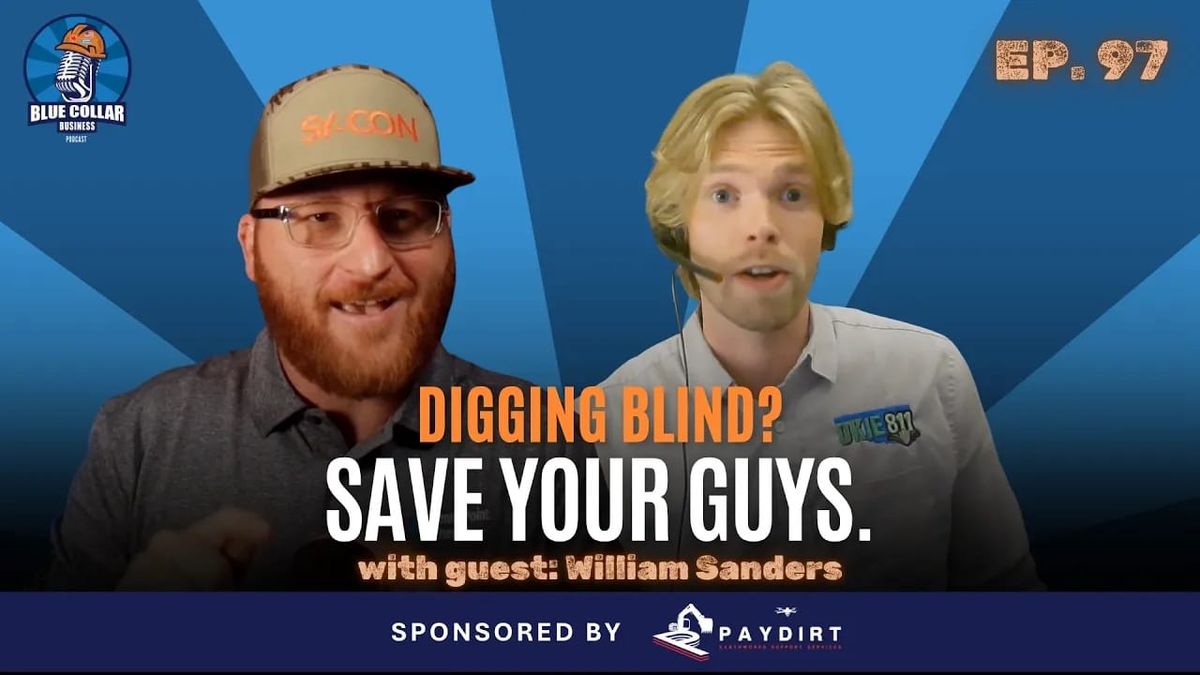
Striking an underground utility isn't just a costly delay; it is a life-or-death gamble for your crew. With infrastructure expanding daily and mapping systems struggling to keep up, understanding how to navigate the subsurface is more critical than ever. Today, we sit down with William "Bo" Sanders, the Education and Outreach Liaison at OKIE811, to break down the real-world stakes of damage prevention.
We get into the exact mechanics of keeping your team safe and your projects moving forward without a hitch. We discuss the importance of utilizing one-call centers, standardizing APWA color codes, and leveraging free digital mapping and safety resources. Bo shares a compelling shift in perspective: what if we stopped just reacting to line strikes with fear and started actively celebrating the underground contractors who flawlessly execute damage prevention protocols?
The reality of excavation is steeped in constant unpredictability and immense liability once you break ground. It is incredibly frustrating to juggle different state legislations, hunt down localized utility maps, and deal with the fallout of unauthorized line strikes just because someone wanted to build a fence. You will walk away from this conversation with a clear mindset shift on how to integrate best digging practices into your daily operations and why sharing this knowledge early on might just prevent a regionalized disaster.
If you care about keeping your crews safe, minimizing project downtime, and elevating the standards of the trades, you’ll get a lot from this. Make sure to subscribe and share this episode with anyone running equipment, managing a site, or planning a dig. What is the biggest hurdle your crew currently faces when trying to get accurate utility locates?
More About this Episode
The Future of Damage Prevention: Reimagining 811 Education and Safe Excavation
Every single day, contractors across the country fire up their machines and break ground. We push dirt, lay pipe, and build the infrastructure that keeps modern society functioning. Underneath our feet lies a massive, complex network of utilities that makes turning on a light switch or running a faucet possible. Yet, the conversation surrounding damage prevention and underground utilities is often treated as an afterthought until disaster strikes.
There is an ongoing crisis in the dirt world. We are dealing with an aging infrastructure hidden beneath the surface, paired with new lines being buried daily. The sheer volume of chaos to weed through is staggering. It is time to shift the narrative around safe excavation and transform how we approach damage prevention at every level, from the seasoned operator to the weekend gardener.
The Escalating Complexity of Underground Utilities
Twenty years ago, the ground was simply not as crowded. Today, it is a tangled web of storm drains, water lines, sanitary sewers, gas mains, and fiber optic cables. Construction is not slowing down. Every new development or road widening project adds another layer of complexity to the subsurface puzzle.
When a crew takes that first swipe with a bucket, they are opening a Pandora's box. The amount of legacy infrastructure sitting unmapped or inaccurately marked is a massive liability. Sometimes, an operator finds three abandoned lines before hitting the active one. The margin for error is razor thin.
This issue stretches far beyond the professional trench. Consider a homeowner who decides to install a new fence. They assume their property line is clear, completely unaware that an unauthorized transmission main sits right on the edge of their yard. When that post hole digger strikes a line, it is not just a damaged pipe. It is an evacuated neighborhood, a massive emergency response, and a potential loss of life. Line strikes are catastrophic events that demand a higher level of respect and awareness from everyone, not just those wearing hard hats.
Shifting the Paradigm: 811 as a Tool, Not a Trap
For a long time, the relationship between excavators and 811 centers has felt purely regulatory. Many contractors view the system as a necessary evil or a liability shield rather than a collaborative partner. This mindset has to change. State 811 organizations are not just there to chastise you when things go wrong. They are heavily invested educational platforms offering a wealth of resources designed to keep your crews alive.
Organizations like OKIE811 are leading the charge by providing comprehensive excavator guides available in print and as downloadable PDFs. These guides detail safe excavation steps, best digging practices, and specific state excavation laws. Beyond literature, these centers offer virtual and in-person training sessions, including full 811 certification programs.
One of the most underutilized resources available to middle-market contractors is the pre-excavation meeting. If you are stepping into an expansive, highly congested project, you have the ability to request a meeting with representatives from the local utilities. You can sit down, map out the survey design, and proactively address the chaos before a single track hits the dirt. Taking advantage of these free, state-provided tools is the defining difference between a professional outfit and a reckless one.
The Next Generation: Implementing K Through 12 Curriculum
We teach children to call 911 in the event of an emergency as early as three years old. Yet, we wait until someone is sitting in the cab of an excavator to explain what 811 means. By that time, we are entirely too late.
There is a massive push needed to integrate damage prevention into standard K through 12 school curriculums. The concepts are not too complex for young minds. Teaching kindergarteners the APWA color codes is entirely feasible. They can easily grasp that a yellow flag means gas and a blue mark means water. Kids are incredible sponges and fantastic distributors of information. A child who learns about utility locating in a classroom will absolutely go home and point out the utility markings in their neighborhood to their parents.
At the high school level, this education becomes critical for workforce development. We have high school programs where teenagers are operating dozers, skid steers, and excavators. They are earning their OSHA 30 certifications and preparing for CDLs. However, many of these students cannot tell the difference between a sanitary sewer and a storm drain.
If we want to build a competent, safety-conscious workforce, we must introduce the career side of damage prevention early. High school students need to know that there are lucrative, honorable careers as utility locators, investigators, and safe digging advocates. We need to invite curiosity about where their water comes from and how electricity reaches their homes.
Mapping the Future: Learning from Global Systems
One of the greatest frustrations in the blue-collar business is the inconsistency of utility mapping. We live in an era of advanced digital mapping and ground penetrating radar, yet crucial utility data is still sitting in filing cabinets from the 1970s.
Looking outside our borders reveals that better systems exist. In places like Australia, their "Before You Dig" programs utilize advanced GIS distribution. When an excavator requests maps, they receive detailed CAD files along with a grading scale indicating how safe the excavation will be. It then becomes the excavator's responsibility to confirm those detailed maps with a private locator.
In the United States, our laws generally mandate that underground utilities register their assets, but the actual distribution of maps is often left up to the utility operator. We operate on a system of contacting, waiting, and hoping the positive response is accurate. While sweeping legislative changes take time, pushing for standardized, accessible digital mapping across all municipalities is a fight worth having. Transparency in subsurface data is the key to preventing catastrophic line strikes.
The Power of Positive Reinforcement in the Trenches
Historically, damage prevention campaigns have relied heavily on catastrophizing. The messaging is almost exclusively centered around doom and gloom. We constantly hear about the injuries, the damaged equipment, the massive project delays, and the tragic fatalities that result from line strikes. While these consequences are entirely real and must be respected, fear-based marketing only goes so far before people become numb to the message.
What is missing from the industry is the celebration of the crews who do it right. We need to actively highlight the contractors who follow best practices to the letter. Imagine a scenario where a crew is hand digging a corridor, their white lining is perfectly executed, and they have maintained a flawless safety record. Instead of just letting them go unnoticed, 811 outreach liaisons and utility owners should be showing up on those sites to thank them.
Handing out branded gear, gift cards, or simply shaking an operator's hand goes a long way. Recognizing crews who maintain 100 percent accuracy on their locate requests and consistently practice safe excavation reinforces good behavior. An underground contractor's job is inherently difficult and stressful. Providing positive reinforcement creates a culture where doing things the right way is a badge of honor, rather than just a tedious requirement.
Meeting the Workforce Where They Are: Social Media and Accessibility
If we want to create a culture shift in damage prevention, we must deliver the message where the workforce actually spends their time. The 18 to 34 demographic is not reading brochures or attending voluntary town halls. They are consuming short-form content on social media platforms.
Educational outreach must adapt to modern consumption habits. Creating "Monday memes" about safe digging practices or breaking down dense webinars into quick, engaging video clips is exactly what the industry needs. We have to find unique, entertaining ways to retain viewers while delivering crucial safety information.
Furthermore, accessibility is non-negotiable. A significant portion of the blue-collar workforce speaks Spanish as their primary language. Providing every single educational resource, excavator guide, and certification program in both English and Spanish is an absolute necessity. Employers have a moral obligation to ensure these free tools are placed directly into the hands of their crews in a language they fully understand.
Overcoming State Inconsistencies
Finally, the lack of standardization across state lines is a massive hurdle for middle-market contractors. A single excavation company might have crews working simultaneously in Arkansas, Missouri, and Oklahoma. Navigating three completely different 811 systems, varying ticket requirements, and distinct state laws creates unnecessary operational friction.
While state-by-state legislation will always vary, the overarching rulebook of damage prevention needs alignment. Streamlining the expectations, software interfaces, and best digging safe practices across all 811 centers would eliminate the extra clutter that currently bogs down contractors.
At the end of the day, the mission is incredibly simple. We want every single person to make it home safely to their families. Whether you are a utility locator, a facility owner, or the guy sitting in the trench, damage prevention is a shared responsibility. Utilize the free tools available, educate your crews, and remember that 811 is there so you never have to dial 911. Stay hydrated, dig smart, and keep your people safe.
Member discussion: