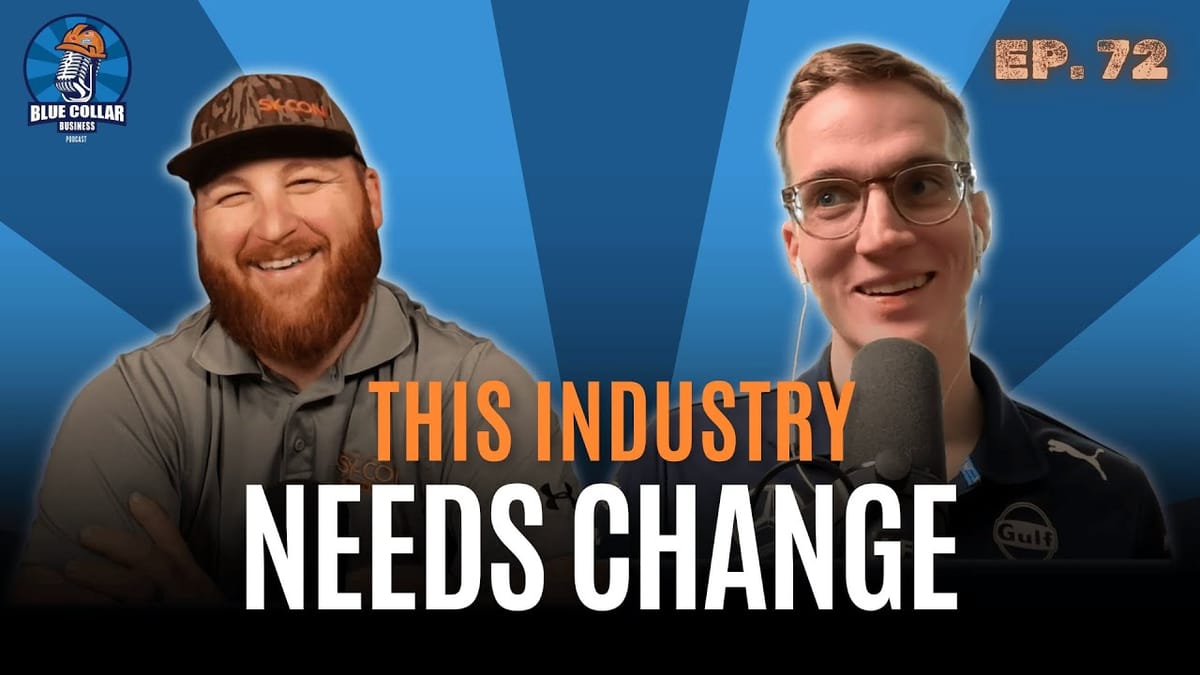
Ever feel like the dirt world is being defined by people who’ve never set foot on a job site? We brought in Aaron Witt to flip that script with a clear, practical playbook for blue-collar storytelling, leadership development, and building a pipeline of talent who actually understands the work. Aaron walks through his journey from pipe crew laborer to scaling BuildWitt into training and events that put people first, then shows why the simplest moves, like posting on LinkedIn daily, beat expensive, complicated marketing plans.
We unpack how transparent project storytelling can turn public skepticism into support, and why the most effective recruiting content is the human side: the operator who solved a tricky grade, the foreman who coaches new hires, the team that delivered safe work under pressure. The conversation gets personal, too. We talk mental health with honesty, non-negotiable habits that compound (read ten pages, train, write), and the reminder that winning at home is the base for leading at work. If leaders don’t go first, with vulnerability, clarity, and consistency, no marketing agency can fix what’s missing.
Dirt World Summit comes up as more than an event; it’s a catalyst. The goal isn’t to be the biggest conference. It’s to feed the hungriest 1,250 leaders so they return to their crews with tools, focus, and a fire to raise standards. Expect insights on making projects visible to the public, practical outreach like school visits and job site tours, and a straightforward mandate: own your narrative or someone else will. One habit, one post, one conversation at a time, we can attract the next generation and build companies that are more than projects and paychecks.
If this resonates, follow, share with a teammate, and leave a review. Your voice helps more builders find the show, and helps the dirt world keep raising the bar.
Follow and stay connected:
Never miss an update—follow, subscribe, and join the conversation!
More About this Episode
Why Storytelling is the Most Underrated Tool in the Blue-Collar Industry
In the world of dirt, pipe, and steel, to those of us who make our living with boots on the ground and grit in our teeth, storytelling probably isn't the first tool we think about when we reach for something to help build our business. Excavators? Check. GPS-grade control? Check. A reliable crew? Check.
But storytelling?
Most blue-collar business owners, myself included for a long time, never put storytelling in the same category as the essentials. But if you’re building something to last, something to pass on, something that actually moves the needle in your community, your team, and even your industry... storytelling might be the most overlooked, underutilized, and powerful tool in the blue-collar toolbox.
The Evolution of Dirt World Media
I recently had the honor of sitting down with Aaron Witt, founder of BuildWitt and the Dirt World Summit, for what turned out to be one of the most eye-opening conversations I've had around marketing, leadership, and purpose in our industry. Aaron has spent the better part of a decade documenting the stories behind the infrastructure we all help build. Not the flashy equipment walk-arounds or highlight reels, but the people, the processes, and the purpose behind this work.
Aaron didn’t grow up blue-collar, but he found himself on a pipe crew in Phoenix at 18 and was hooked. Since then, he’s not just been building a company, he's been building a movement.
His early days of telling stories through blogs, social posts, and eventually a podcast (now with over 350 episodes) laid the groundwork for what’s now known as the Dirt World Movement: a collective push to bring respect, visibility, and pride back to the trades by telling better stories.
Why Storytelling Matters More Than Ever
We’ve all heard the complaints: “People just don’t understand what we do.” But as Aaron pointed out, the bigger issue is that no one is telling them. And when we fail to speak up, someone else will tell our story for us, and probably get it wrong.
That’s how blue-collar industries wind up with stigmas. That’s how the narrative gets hijacked. And that’s how we lose the next generation of workers before they even realize what opportunities are right in front of them.
Telling your story isn’t about boasting or marketing fluff. It’s about connection. It’s about being visible in a world that desperately needs infrastructure yet barely understands where it comes from or who’s building it.
Aaron shared a perfect example from his visit to the Netherlands where major public works projects are presented with media-rich visitor centers and real-time visual progress updates. Why? Because they want their citizens to understand what’s being built. In the U.S., we often have billion-dollar public projects wrapped in mystery. You can’t even tell what’s being done unless you’re on the inside.
That disconnect hurts us. Storytelling is how we fix it.
You Don’t Need a Budget to Start
If you think telling your story requires a full-time videographer, an expensive agency, or a team of creatives, think again.
Aaron said it best: if all you do is post on LinkedIn once a day, you’re already ahead of most of the industry. That single act, sharing a thought, a photo from the field, a challenge you overcame, or something about the people who make your company what it is, starts shaping the narrative around your business.
And it starts with you.
There’s no replacement for leadership buy-in. Aaron has seen it firsthand: the companies making the biggest waves in civil construction today all have leadership at the top who believe in telling the story. Whether it’s SGT Corporation, Turner Mining Group, or Quality Enterprises, what they share publicly isn’t marketing, it’s leadership.
The best marketing doesn’t look like marketing. It looks like authenticity. And that’s something our industry has in spades, we just need to start sharing it.
Building the Next Generation, One Story at a Time
Aaron told a story that stuck with me about Glenn Barranco, a civil construction leader in North Dakota. Glenn didn’t show up to a heavy equipment program to recruit. He showed up because he believes in the mission of pouring into the next generation. He spent hours with a handful of students simply talking to them, answering questions, and showing them that this industry has a future for them.
And that’s what this all boils down to. Leadership isn’t just about project execution or financial performance. It’s about people. It’s about being the kind of leader who cares more about the kid asking where the water goes after a flush than about the next bid submission.
You don't need to create viral videos. You just need to show up, talk about the work you’re doing, and speak to the value of the people doing it.
Personal Development Comes First
One of the recurring themes Aaron and I connected on was personal growth. It’s easy to think about becoming a better leader in terms of systems, strategy, and scale. But if we’re not sharpening ourselves, we can’t expect anyone else on our team to grow either.
Aaron shared openly about his own struggles with anxiety, burnout, and the pressure to constantly perform. What changed the game for him wasn’t a new tool, it was building consistent, healthy habits. Reading 10 pages a day. Working out every day. Reflecting. Writing. Making self-development non-negotiable.
That consistency not only made him sharper, it made him more empathetic, more present, and a better communicator. And that’s something every leader needs if they’re serious about impacting the next generation.
It Starts at Home
One of the most powerful moments from the Dirt World Summit (and this podcast conversation) was when Aaron and I talked about Randy, a speaker at the Summit who drilled home the idea of winning at home. You can’t call yourself a great leader if you’re losing with your wife and kids.
This isn’t just about company culture. It’s about who you are when the boots come off. The best leaders in construction aren’t just building roads, they’re building legacies. And that starts with being present, putting the phone down, and being the father, mother, husband, or wife your family needs.
Looking Ahead: Dirt World 2026
This year’s Dirt World Summit is already 80% sold out, and it's only January. That tells you something.
It tells you that people in our industry are hungry for something different. They’re not just looking for another conference to check a box. They’re looking for real conversations, deeper relationships, and tools to become better people, not just better contractors.
In 2026, the Summit is dialing back the size and dialing in the quality: 1,250 industry leaders who are all in. The goal? To feed the hungriest, and let them raise the bar for everyone else.
That’s how change happens.
What You Can Do Today
If you’re a small blue-collar business owner, and this all feels overwhelming, here’s the best piece of advice I can give you, borrowed directly from Aaron:
Pick one thing.
- Start posting on LinkedIn once a day.
- Share a behind-the-scenes photo of your team.
- Brag on your operator or crew leader.
- Start reading 10 pages of a good book every day.
- Have a real conversation with someone on your crew who’s struggling.
It doesn’t have to be all of them. Just one.
Because when we all do one thing to get better, the industry gets better.
And when that happens, we’re not just building roads, pipelines, or treatment plants.
We’re building something that lasts.
Member discussion: