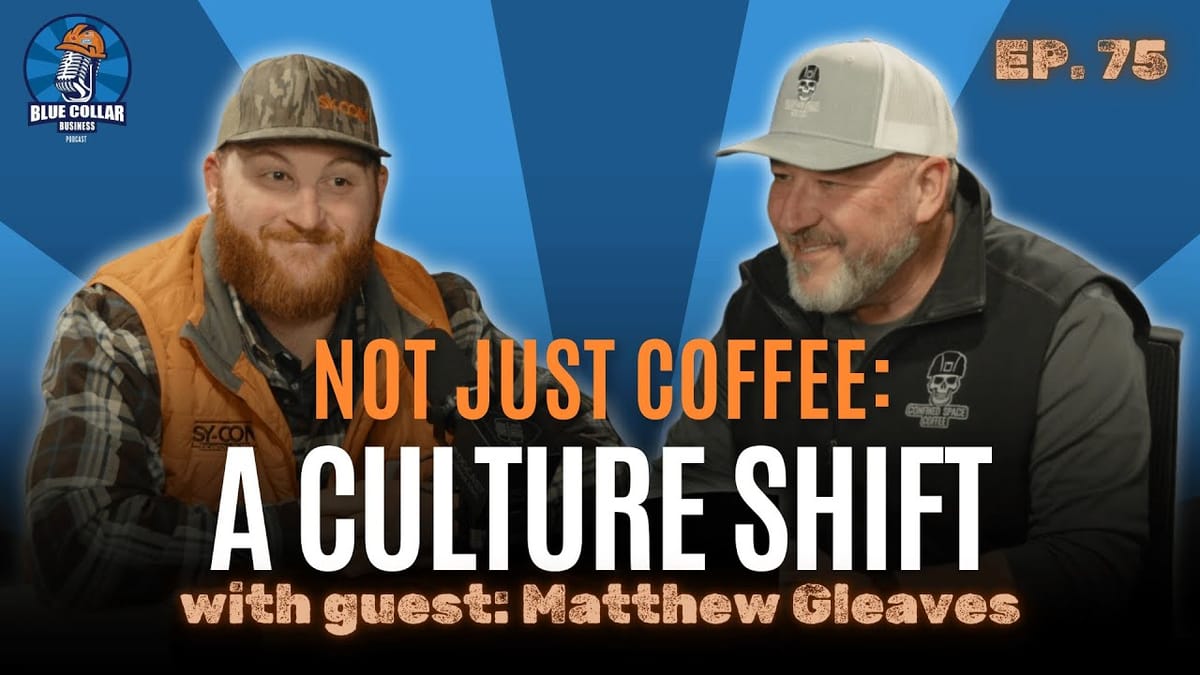
A night shift, a permit delay, and a fresh pot of coffee changed the way Matthew Gleaves thinks about safety. Sitting in a rescue trailer with harnesses and figure eights on the table, he turned small talk into real training and watched incident rates fall while morale climbed. That moment became the spark for Confined Space Coffee, and a blueprint for building a safety culture that crews actually believe in.
We dig into Matthew Gleaves’ path from ministry to pipe fitting to safety leadership, including seasons on the Trans-Alaska Pipeline and a rescue that cemented a “prepare before it breaks” mindset. We break down why trench standards must hold in “comfortable” places like front yards, how compliant doesn’t always mean safe, and why EMR is more than a number, it’s a gatekeeper to bids, margins, and reputation. Expect clear takes on competent person duties, near-miss reporting that helps instead of shames, and a “Take Five” routine that makes pausing to plan as normal as putting on a hard hat.
This conversation also reaches the human side of the trades. Confined Space Coffee supports organizations fighting PTSD, suicide, and trafficking, because the toughest confined spaces are often the heart and mind. We talk about checking on your people, turning office-vs-field tension into joint planning, and using simple rituals, like a cup of coffee, to open honest conversations that stick when the job gets loud and the hours get long. If you lead crews, bid complex work, or just want fewer close calls, this one’s a practical guide you can use tomorrow.
If this resonated, follow the show, share it with a teammate, and leave a quick review. It helps more builders, operators, and safety pros find the tools, and the courage, to do the work right.
Follow and stay connected:
Never miss an update—follow, subscribe, and join the conversation!
More About this Episode
Why Safety Culture Fails in Blue Collar Industries and How We Fix It One Conversation at a Time
Safety in the blue-collar world has a branding problem.
We all know it matters. We all know it saves lives. And yet, for most tradesmen and women, the word safety immediately brings to mind long meetings, boring videos, check-the-box paperwork, and a guy in a vest reading OSHA slides off a laptop while everyone mentally checks out.
That disconnect is costing our industry real people.
I have spent my entire career in and around blue-collar work. Dirt work. Utilities. Construction. Commercial job sites where things can go sideways in seconds if people are not paying attention. I have also spent years building a business, managing crews, dealing with workers' comp claims, EMR ratings, near misses, and the emotional weight of knowing that one bad decision can change someone’s life forever.
Here is the truth most people do not want to admit. Safety does not fail because people do not care. Safety fails because we teach it wrong.
The Real Problem With Safety Training
Most safety programs are designed to meet minimum requirements, not to change behavior.
They are built around compliance instead of culture. They rely on fear, repetition, and paperwork rather than trust, conversation, and real-world application. They happen in classrooms instead of job site trailers. They are delivered by people crews do not know, do not trust, and do not relate to.
Blue-collar workers are action-oriented problem solvers. We learn by doing. We learn through experience. We learn through conversation with people who have been there before us. When safety training ignores that reality, it becomes background noise.
I have sat through every version of safety training you can imagine. I have watched good people fall asleep during eight-hour classes and then walk straight into dangerous situations because nothing stuck. That is not a people problem. That is a system problem.
Safety Is Personal Whether We Admit It or Not
Every trench collapse story hits differently when you have stood next to a hole that caved in behind you.
Every confined space incident feels closer when you have been hundreds of feet in the air or deep underground, knowing that if something goes wrong, rescue is not immediate. Every workers' comp claim feels heavier when you realize it represents a family mortgage, car payment, anda future that could be disrupted.
Safety is not theoretical in our world. It is deeply personal.
I have watched strong, capable men carry invisible weight from divorce, financial pressure, PTSD, and burnout while still showing up every day to get the job done. I have been that guy. Many of you reading this have been that guy, too.
That is why safety cannot just be about hard hats, trench boxes, and harnesses. It has to include mental health, awareness, and the courage to ask someone how they are really doing.
How Culture Changes One Conversation at a Time
The most effective safety training I have ever seen did not happen in a classroom.
It happened in a job site trailer at two in the morning with a cup of coffee in hand.
No slideshow. No lecture. Just conversation.
When you slow things down enough to talk with someone instead of at them, something changes. Questions come up naturally. Curiosity replaces resistance. People start connecting safety concepts to their actual work instead of abstract rules.
That is how awareness grows. That is also how trust grows.
Trust is the foundation of every strong safety culture. Without it, no amount of policy will save you.
Why Confined Space Is More Than a Term
In construction, confined spaces are regulated environments with limited entry and exit. We all know the definition.
But the longer I stay in this industry, the more I realize that confined spaces exist everywhere. Not just in tanks, trenches, and lift stations, but in people.
When communication breaks down between the field and the office, people retreat. When pressure builds without an outlet, people shut down. When personal struggles go unspoken, they grow heavier.
That is why safety culture and company culture are inseparable. If your people do not feel seen, heard, and supported, safety becomes just another rule to work around.
EMR, ROI, and the Business Case for Safety
Let us talk business for a moment.
Your Experience Modification Rate is not just an insurance number. It is a direct reflection of how well your company protects its people. It impacts your ability to bid work, win contracts, and grow sustainably.
A high EMR costs you money. It costs you opportunities. It costs you credibility.
But the real cost of poor safety is not measured in premiums or lost bids. It is measured in injuries, burnout, turnover, and regret.
The companies that win long term are the ones that understand this early. They do not treat safety as overhead. They treat it as an investment.
Leadership Sets the Standard, Whether You Like It or Not
If you own or lead a company, your people are watching you.
They watch how seriously you take safety meetings. They watch whether you wear your PPE. They watch how you respond to near misses. They watch whether production always comes before protection.
You cannot outsource culture. If safety only matters when OSHA is around, your people know it. If it matters every day, they feel it.
The best leaders I know do not preach safety. They model it. They talk about it casually and consistently. They correct issues without humiliation. They ask questions instead of making assumptions.
They understand that standards do not change just because the environment feels comfortable.
Coffee as a Catalyst, Not a Gimmick
At first glance, coffee might seem like a strange vehicle for safety culture.
But when you think about it, coffee has always been where conversations happen. Breaks. Early mornings. Late nights. Trailers. Shops. Kitchens. Job sites.
Coffee slows people down just enough to talk. That is the real power behind Confined Space Coffee. It is not about caffeine. It is about connection.
It creates a reason to pause. A reason to gather. A reason to ask better questions.
When used intentionally, it becomes a simple tool for leaders to engage their crews in real conversations about safety, awareness, and life.
Supporting More Than Just Job Sites
Safety does not end when the shift does.
That is why it matters when companies support causes that address mental health, PTSD, human trafficking, and recovery. These issues exist in our industry whether we talk about them or not.
Blue-collar workers are some of the toughest people on the planet. They are also human. They carry scars that do not show up on job hazard analyses.
Supporting organizations that help people out of confined spaces of the mind and heart is not charity. It is leadership.
What You Can Do Starting Tomorrow
You do not need a massive safety department to make a difference.
Start small.
Have better conversations. Ask how someone is really doing. Take five minutes before work to talk through risks. Reward safe behavior instead of only correcting unsafe behavior. Learn your EMR and understand what drives it. Stop cutting safety line items to win bids.
Most importantly, remember that safety is not about perfection. It is about intention. When people know you care, they care more, too.
That is how cultures change. One conversation at a time.
Member discussion: