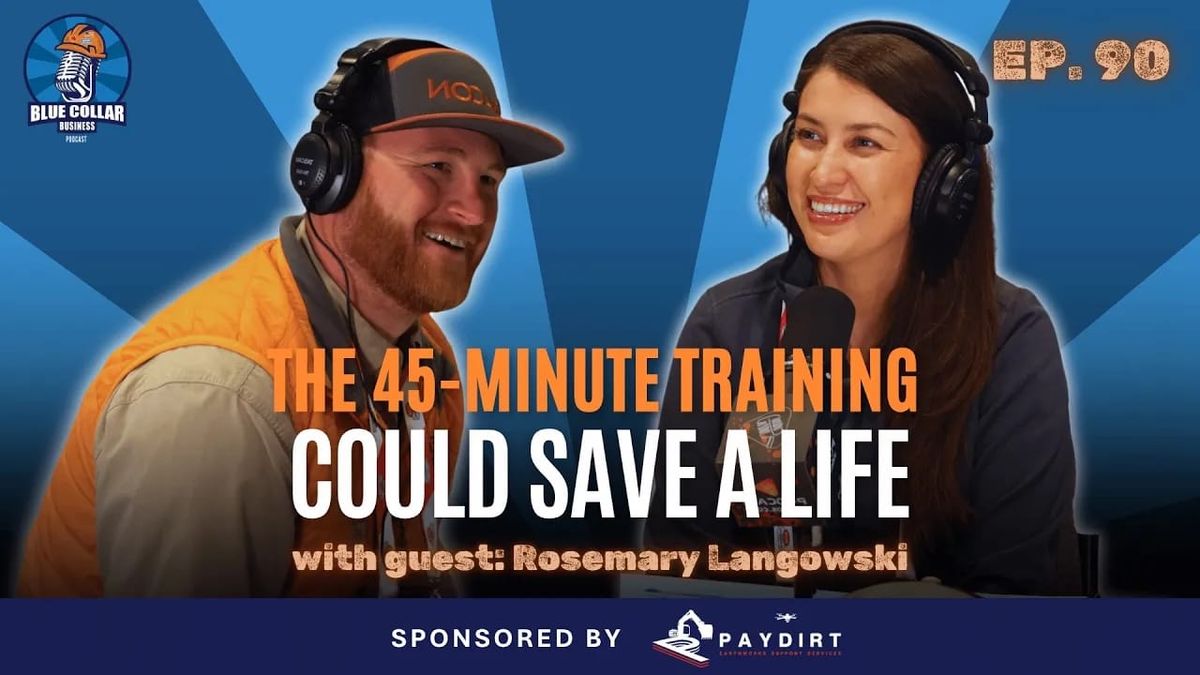
Downtime is a profit leak, but a line strike due to a language barrier is an outright tragedy. Right now, infrastructure projects are booming all across the country, yet a massive portion of the boots on the ground doing the actual digging are left completely in the dark regarding critical regulations. We sit down with Rosemary Langowski, a bilingual damage prevention specialist at Washington Gas, to discuss the critical disconnect between management safety mandates and what Spanish speaking crews actually understand.
We get into the hard data showing why safe digging practices cannot afford to be lost in translation. Rosemary breaks down the updated Common Ground Alliance Best Practices, highlighting the bilingual task team efforts that urge nationwide operations to provide material in a worker’s native language. We explore the implementation of free, micro sized learning modules designed specifically for rapid excavator training, and we tackle the absolute necessity of giving every single laborer on site stop work authority regardless of their position.
The unglamorous truth is that many contractors claim they do not have near misses or line strikes simply because they fail to document them or talk to their labor force. Investing just forty five minutes of your morning to feed your crew donuts and walk through a toolbox talk in their primary language is significantly cheaper than a devastating utility repair bill or an injury report. You will walk away from this conversation with immediate, zero cost training solutions that bridge the communication gap on site.
If you care about protecting your workforce, avoiding catastrophic utility damage, and building an ironclad company culture based on mutual trust, you will get a lot from this episode. Be sure to subscribe to the Blue Collar Business Podcast and share this with a fellow contractor who needs to hear it. What is the biggest step you are taking this month to ensure your Spanish speaking crews actually comprehend your safety protocols? Let us know in the comments below.
More About this Episode
Breaking the Language Barrier in Utility Damage Prevention
The construction industry is the literal backbone of our infrastructure. Day in and day out, dedicated crews are on the ground running backhoes, operating heavy equipment, and digging trenches to install the utility networks that keep our modern world moving. With a massive influx of federal infrastructure funding, particularly bead money allocated for widespread fiber expansion, the volume of active job sites is increasing exponentially.
As job opportunities multiply, a critical reality on the ground demands our immediate attention: a significant percentage of the labor force performing this high-risk work consists of native Spanish speakers. Estimates indicate that roughly 30% of the underground utility construction workforce relies on Spanish as their primary language.
When workers are tasked with high-consequence tasks like excavating around live natural gas lines, electrical conduits, or fiber optic networks, a language barrier becomes a major safety liability. Data shared through the Common Ground Alliance education committee reveals a stark, terrifying statistic: since 2011, workplace fatalities within the Latino construction community have increased by 107%. This trajectory is entirely unacceptable. We have an institutional and moral obligation to ensure that every individual on a job site understands exactly how to perform their duties safely so they can return home intact to their families at the end of every shift.
The True Cost of Production Quotas Over Safety
In the fast-paced world of utility excavation, production pressure is a constant reality. Crews are frequently compensated based on production metrics, such as the total linear footage of pipe or cable installed per shift. This operational framework inadvertently creates a culture where speed is prioritized over meticulous safety protocol. For Spanish-speaking laborers, this pressure is magnified when they do not understand the underlying regulations or feel structurally empowered to question a hazardous situation.
Every utility operator, excavator, and project owner must recognize that safety drives expense. Failing to execute safe digging practices can result in catastrophic line strikes, expensive utility repair bills, legal liabilities, and tragic loss of life. A primary objective of modern construction leadership must be the universal implementation of stop work authority.
Stop work authority means that every single person on a job site, from the most senior superintendent to the newest laborer handling a shovel, possesses the explicit right and responsibility to halt operations immediately if they perceive a safety hazard, a discrepancy in utility markings, or an instruction they do not fully comprehend.
Language barriers frequently prevent Spanish-speaking personnel from knowing that stop work authority even exists. They are often instructed to meet rigid quotas and may continue digging in a high-risk scenario simply because they lack the vocabulary or the organizational confidence to voice a concern. Overcoming this requires construction leaders to actively build trust. When management makes a concerted effort to communicate safety protocols in a worker's native language, it breaks down cultural silos and fosters an environment where laborers feel safe speaking up when a situation appears dangerous.
Utilizing the Common Ground Alliance Best Practices Blueprint
To achieve a standardized approach to excavation safety, the underground utility industry relies heavily on the Common Ground Alliance guidelines. The organization publishes a comprehensive reference document known as the Best Practices guide, which is currently in its 22nd version. Because the operational landscape changes with new technologies and methodologies, this text functions as a living document, constantly updated through a collaborative consensus process involving stakeholders from across the industry, including excavators, utility operators, locators, and regulators.
A significant milestone achieved by the bilingual task team within the Common Ground Alliance was the formal integration of language accessibility into the official practice statements. The guidelines explicitly state that a comprehensive nationwide damage prevention education program must identify and execute plans that address individual learning requirements, specifically including languages other than English where appropriate.
This best practice places the onus directly on construction companies and utility operators to provide accessible instructional materials. Handing the keys of multi-ton mechanized excavation equipment to an operator who cannot read local safety signage or fully comprehend English training materials is equivalent to letting a teenager drive a car without a license or knowledge of traffic laws. If a crew member does not command English as a primary language, management must provide safety briefings, one-sheets, or training modules in their native tongue.
Free Multilingual Resources for Field Crews
A frequent objection raised by contractors regarding bilingual training is the perceived cost or the difficulty of sourcing qualified bilingual instructors. The Common Ground Alliance has effectively eliminated this excuse by partnering with industry education groups to build a comprehensive, completely free excavator curriculum. This digital asset is openly accessible online to members and non-members alike, removing any financial barriers to implementation.
The curriculum features more than forty distinct training modules, with a substantial portion already translated into high-quality Spanish. Rather than forcing field crews into grueling, hour-long classroom lectures that reduce information retention, these resources utilize a microsized learning model. The modules are structured into short, interactive segments lasting approximately four to fifteen minutes each.
These microsized modules cover vital operational topics, including:
- The fundamental mechanics of dialing 811 and processing a utility locate ticket
- The exact legal requirements for hand digging within the designated tolerance zone
- The critical necessity of utilizing potholing techniques to visually verify utility depth before employing heavy machinery
Contractors can easily integrate these free Spanish-language resources into their existing Learning Management Systems or assign them directly to employees via email. Upon completing a module, the worker receives a formal certificate of completion, providing the employer with verifiable documentation of safety training. Utilizing these microsized learning tools during rainy days, morning safety huddles, or quick stand-up meetings ensures that Spanish-speaking laborers are aligned with identical safety standards as English-speaking personnel.
The Strategic Return on Small Time Investments
Implementing a robust bilingual safety program requires a deliberate shift in operational mindset. Construction leaders must view safety training not as lost production time, but as a strategic long-term investment. Dedicated safety professionals and utility representatives, including Rosemary Langowski of Washington Gas, frequently offer on-site bilingual damage prevention training completely free of charge to contractors, utilities, and municipal crews.
The primary hurdle to executing these sessions is an administrative reluctance to pause field production. However, dedicating a brief 30 to 45-minute window for a focused safety briefing can yield an immense return on investment. This small window of proactive education can easily prevent a line strike that could cost tens of thousands of dollars in infrastructure repairs, severely damage corporate reputation, and halt project timelines for days or weeks.
Successful construction firms recognize the value of this trade-off by building safety education directly into their monthly operational schedules. For example, setting aside the first Monday morning of every month to bring all field crews into the shop for a collective breakfast provides an ideal venue for safety education. This structured environment allows management to discuss recent near misses, address equipment maintenance issues, and deliver targeted bilingual safety curriculum.
For organizations operating across expansive regional territories, scheduling working lunches or brief morning toolbox talks with a dedicated bilingual safety trainer ensures that remote crews receive consistent, high-fidelity instruction. Industry professionals can easily connect with specialized coordinators like Rosemary Langowski via professional networks like LinkedIn or through utility communication channels to arrange custom training tailored to their specific Spanish-speaking crews.
Ultimately, the responsibility for reversing the rising trend of workplace fatalities within the Latino construction community rests with corporate leadership. By actively leveraging the free multilingual resources provided by the Common Ground Alliance, enforcing stop work authority across every tier of the workforce, and intentionally dedicating time for targeted bilingual training, contractors can build a highly resilient culture of safety. Ensuring that every worker fully comprehends operational risks and safety laws is the single most effective strategy for protecting vital underground infrastructure and ensuring that every crew member returns home safely at the end of the day.
Member discussion: